


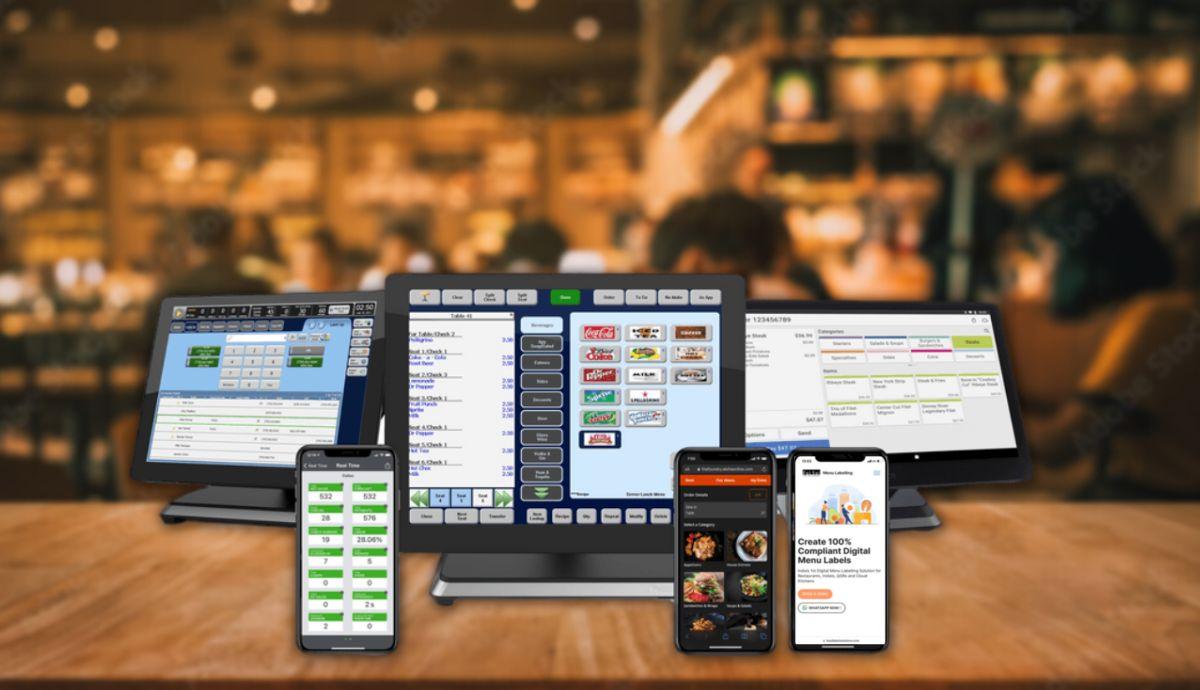
The future of restaurant operations is being actively defined by the strategic choices of the leaders in the restaurant management software market. A detailed examination of the Restaurant Management Software Market Market Leaders, particularly the modern cloud-based platform providers, reveals a clear and powerful strategy centered on creating a vertically integrated, all-in-one ecosystem that extends far beyond a simple point-of-sale system. These leaders are no longer just software companies; they are positioning themselves as comprehensive technology and financial partners to the restaurant industry. Their strategy is designed to create an incredibly "sticky" platform that is difficult to leave, by embedding their solutions into every critical workflow, from taking an order to processing a payment to running payroll. The market's consistent growth provides the ideal environment for these leaders to execute their ambitious platform strategies. The Restaurant Management Software Market size is projected to grow USD 49.74 Billion by 2035, exhibiting a CAGR of 7.61% during the forecast period 2025-2035. To capture a dominant share of this growth, leaders like Toast are pursuing a holistic strategy that combines hardware, software, and financial technology (fintech) to become the indispensable operating system for their restaurant clients.
The cornerstone of the market leaders' strategy is the creation of a single, unified platform that addresses all of a restaurant's core needs. This starts with a modern, cloud-based point-of-sale (POS) system that is easy to use and can be deployed on a variety of hardware, including proprietary terminals, iPads, and handheld devices for tableside ordering. From this central hub, they have strategically expanded their software offerings to include a suite of integrated modules. This includes front-of-house tools like online ordering and delivery management, reservation and waitlist systems, and customer loyalty and marketing programs. It also includes back-of-house tools for inventory management, recipe costing, and employee scheduling and payroll. The core strategic insight is that by offering all these modules within a single, integrated platform, they can provide a seamless experience and a unified data source that a restaurant cannot achieve by piecing together multiple different vendors. This platform approach not only increases the value of their offering but also creates numerous opportunities for cross-selling and up-selling, significantly increasing the average revenue per user (ARPU).
Perhaps the most powerful and differentiating strategic element for market leaders is their deep integration of financial services, particularly payment processing. Instead of allowing their customers to use a third-party payment processor, leaders like Toast and Lightspeed require or strongly incentivize their customers to use their own integrated payment solution. This fintech strategy is brilliant for several reasons. First, it creates a massive, recurring revenue stream based on a percentage of the restaurant's sales, directly aligning the vendor's success with its customer's success. Second, it makes the platform incredibly sticky; ripping out a POS system that is also your payment processor is a complex and disruptive process. Third, and most strategically, it gives the platform vendor access to a treasure trove of real-time financial data. By analyzing a restaurant's daily sales and cash flow, they can then offer other high-margin financial products, such as working capital loans (e.g., Toast Capital) and business insurance, turning a software relationship into a much deeper financial partnership. This fusion of SaaS and fintech is the defining strategy of the current market leaders and their primary engine of growth and competitive differentiation.
Top Trending Reports -
UK Enterprise File Synchronization Sharing Market

 English
 Arabic
 French
 Spanish
 Portuguese
 Turkish
 Dutch
Dutch
 Italiano
 Russian
 Romaian
 Portuguese (Brazil)
 Tiếng Việt