


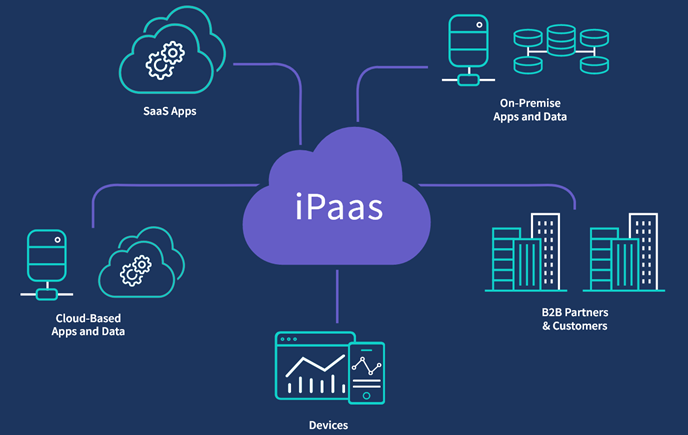
The vast and exponentially growing global Integration Platform as a Service Market Size is a direct and powerful reflection of a fundamental challenge facing every modern enterprise: digital fragmentation. In today's business environment, critical data and processes are no longer located in a single, monolithic system but are spread across a dizzying array of different cloud-based SaaS applications, on-premise legacy systems, and custom-built applications. iPaaS is the essential "digital glue" that connects these disparate systems, enabling data to flow seamlessly between them. The market's immense valuation is a measure of the total global spending on these cloud-based middleware platforms, which provide a suite of tools for building, deploying, and managing integrations without the need for complex custom coding. The sheer scale of the market is justified by its critical role in enabling digital transformation, as no major business initiative—from creating a 360-degree customer view to automating a business process—can be achieved without effective application and data integration. iPaaS has become the central nervous system of the modern, connected enterprise, and its market size reflects its indispensable strategic importance.
The economic drivers that underpin this massive market valuation are compelling and deeply rooted in the pursuit of business agility and operational efficiency. The primary driver is the explosive adoption of best-of-breed SaaS applications. The average enterprise today uses hundreds of different SaaS apps, from Salesforce for CRM to Workday for HR to Slack for communication. This creates a massive integration headache, as valuable data becomes trapped in isolated silos. iPaaS provides a powerful and cost-effective solution to this problem. Instead of hiring a team of expensive developers to write custom, point-to-point integration code for every new application, a business can use an iPaaS platform's pre-built connectors and intuitive, low-code interface to build and manage these integrations much more quickly and at a fraction of the cost. This dramatically accelerates the speed at which a business can adopt new technologies and automate its processes, which is a massive competitive advantage. The clear and demonstrable return on investment (ROI) from this increased agility and reduced development cost is the primary economic engine fueling the market's growth.
Beyond cost and speed, the market size is also a function of the strategic capabilities that iPaaS enables. A modern iPaaS platform is not just about moving data from point A to point B; it has evolved to become a comprehensive platform for enterprise automation and API management. These platforms now include sophisticated features for orchestrating complex, multi-step business workflows that span multiple applications, and for creating, publishing, and managing APIs to securely expose a company's data and services to its partners and customers. This has elevated iPaaS from a simple tactical integration tool to a strategic platform that is at the heart of a company's digital business strategy. The ability to rapidly create new, integrated digital experiences for customers and to automate core business processes is what is driving the significant enterprise investment in this technology, thereby contributing to the market's substantial valuation and its impressive growth trajectory. The Integration Platform as a Service Market size is projected to grow to USD 211.36 Billion by 2035, exhibiting a CAGR of 28.87% during the forecast period 2025-2035.
Top Trending Reports -
UK Security Orchestration Automation And Response Market

 English
 Arabic
 French
 Spanish
 Portuguese
 Turkish
 Dutch
Dutch
 Italiano
 Russian
 Romaian
 Portuguese (Brazil)
 Tiếng Việt